
Animal Health Resources

Humane Society of Charles County
Humane Society of Calvert County
Calvert Animal Welfare League
Patuxent Animal Welfare Society
St. Mary’s Animal Welfare League (SMAWL)
Second Hope
Animal Relief Fund
Pets in Need in SOMD SPOT
Rescue Angels of SOMD
Cat Assistance and Rescue
Friends of Felines
Feral Cat Rescue
Mabel’s Orphaned Angels Rescue
Last Chance Animal Rescue
Chesapeake Rescue Alliance
Help for Pets in Charles County
Bats
Click the link below to learn more about bats in your home.
https://dnr.maryland.gov/wildlife/Pages/plants_wildlife/bats/batsinhome.aspx
Snake Bite Prevention
With warmer temperatures occurring, you need to be careful about encountering snakes outside in different areas of your yard, in parks, or in the woods and fields. Remember to be observant and to teach your children about snake bite prevention. Use common sense and never reach under rocks, bushes, or other areas where you cannot see and where a snake may be living. Most people get bitten on the hands or feet when they inadvertently step on a snake or reach where they cannot see.
Most of the 27 species and subspecies of snakes found in Maryland are not venomous like the Northern brown snakes, rat snakes and garter snakes. However, there are two types of venomous snakes found in Maryland. They are the eastern copperhead and the timber rattlesnake (not found in Charles County). The eastern copperhead snake is venomous and found in Charles County. Do not attempt to capture or handle it. They will bite if provoked, and the bites are extremely painful. Seek medical attention immediately if bitten. A pictorial guide to Maryland snakes can be found at the below Department of Natural Resources link:
http://dnr.maryland.gov/wildlife/Pages/plants_wildlife/herps/Fieldguide_OrderSquamata.aspx
The following additional tips to avoid being bitten by a snake are provided by the Maryland Poison Center.
- Leave snakes alone. Do not try to get a closer look or try to pick up a snake.
- Wear gloves when gardening. Move plants and weeds with a gardening tool before reaching your hand into a place that you cannot see.
- Stay out of tall grass and remain on hiking paths. Use a walking stick to move grass and brush that you cannot see through if not hiking on a path.
- Always hike with a friend.
If you are bitten, the Maryland Poison Center recommends the following:
Do not panic; keep still and calm. Fewer than 10 people die of snakebites each year in the United States.
Call the Maryland Poison Center immediately at 1-800-222-1222. If the person who was bitten is having trouble breathing or losing consciousness, call 911 immediately.
For additional information on prevention and first aid for snakebites, visit https://mdpoison.com/.
Animals in Public Places Click the link below to learn more about animals in public places.
Ticks
Click the link below to learn more about ticks.
https://health.maryland.gov/phpa/OIDEOR/CZVBD/pages/tickborne_dz.aspx
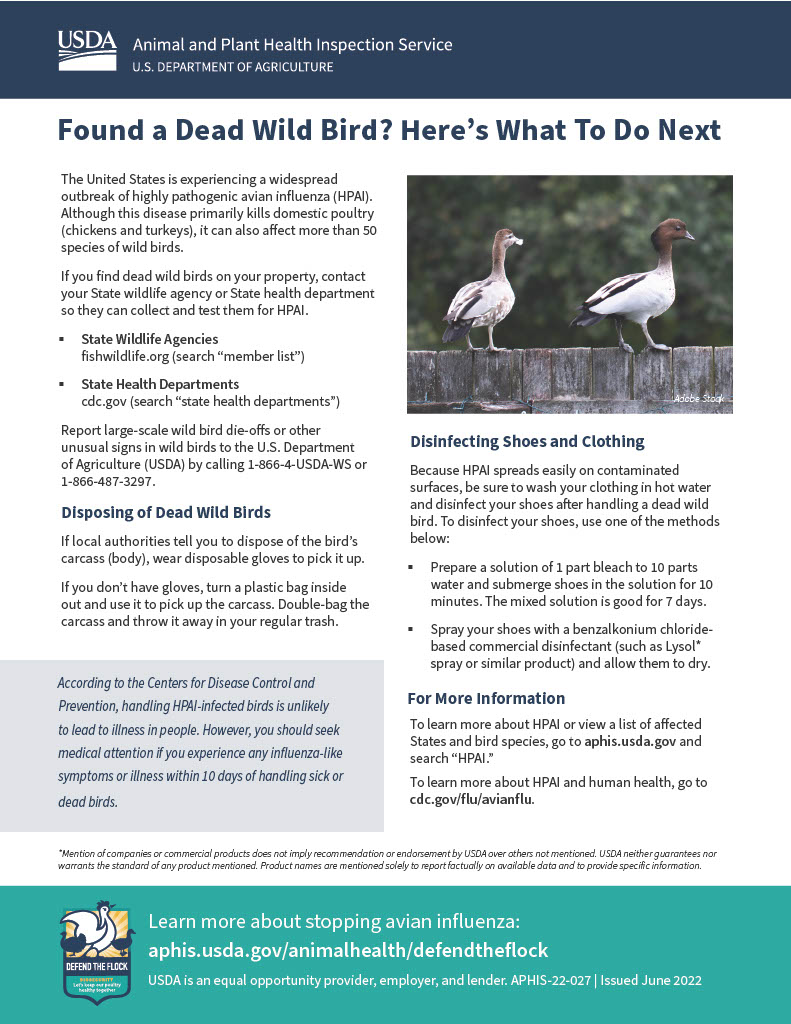
Avian Influenza
Click the link below to learn more about avian influenza.
https://health.maryland.gov/phpa/OIDEOR/CZVBD/Pages/Avian-Influenza.aspx
Disease Prevention for Petting Zoos and Fairs
Click the link below to learn more about disease prevention for petting zoos and fairs.
https://mda.maryland.gov/AnimalHealth/pages/fairs-shows.aspx
https://avmajournals.avma.org/view/journals/javma/261/12/javma.23.05.0280.xml
FINANCIAL ASSISTANCE
Vet Bills
- Brown Dog Foundation - browndogfoundation.org
- Care Credit - carecredit.com
- Extend Credit — extendcredit.corn
- Fairy Dog Parents — fairydogparents.org
- Feline Veterinary Emergency Assistance - fveap.org
- Frankie's Friends — frankiesfriends.com
- Paws 4 A Cure — paws4acure.org
- Pets of the Homeless — petsofthehomeless.org
- Shakespeare Animal Fund — shakespeareanimalfund.org
- • The Big Hearts Fund - bigheartsfund.org
- The Magic Bullet Fund — themagicbulleffund.org
- The Mosby Foundation — themosbyfoundation.org
- The Pet Fund — thepetfund.com
- The Riedel & Cody Fund — riedelcodyfund.org
- Red Rover — redrover.org